
My Own Little Ice Age
I can finally say I’m in my last year of medical school. It has been a bumpy ride, but only one clerkship, a research project and an OSCE separate me from graduating. I remember receiving my acceptance letter eight years ago.
Contributing Writer
Universidad Autónoma de Madrid
I am a 6th year Medical Student at Universidad Autónoma de Madrid, with a passion for medical education & digital health. During my first few years as a medical student, I participated in student representation, both at a local (university) and national level, which led me to my interest in healthcare advocacy & leadership. I have a very active presence on social media, particularly Twitter (@mgalandejuana).

I can finally say I’m in my last year of medical school. It has been a bumpy ride, but only one clerkship, a research project and an OSCE separate me from graduating. I remember receiving my acceptance letter eight years ago.
Since grade school, I’ve been blessed to play sports at different levels. Some were through organized clubs while others were at the local gym or the park nearby. Each sport required that I commit time and considerable effort to learning a unique set of skills. Some placed emphasis on hand-eye coordination, while others required endurance and footwork.
In the spirit of the year of realizing things, I’m starting to think that the med school struggle of knowing/doing/being enough never actually ends. Even as physicians, the problem of “enough” persists, albeit in a form less easily remedied by additional time spent reading First Aid or viewing Pathoma.
The morning that we met was one most medical students eagerly anticipate as they embark on the journey that is medical education. Excitedly I put on my first set of scrubs, elated to look like a “real” doctor. Beneath my external façade however, I was masking an underlying feeling of anxiety.

When I was first invited to host a Roundtable Discussion, I was told that we were supposed to bring together medical students to discuss their idea of a modern physician: What characteristics would they have? What kinds of skills would we want to cultivate in this increasingly technological age? What kind of doctor would be necessary to meet the needs of the health care system now and into the decades ahead?
“This wine is growing on me,” Emily remarked as she tipped her head back and took another long sip from the now oxblood stained glass, “It’s a lot more nuanced than I originally thought.”
“This is a room of leaders,” Shannon Brownlee, Senior Vice President of the Lown Institute, told us as she encouraged our continued advocacy for change in health care and medical education.
Many students in the health professions find little support for the passions that drove them into health careers. In May 2016, a group of 20 health professions students, clinicians, and organizers assembled on the lower level of a Chicago hotel during the Lown Institute’s annual conference to talk about new pathways.
In the playbook of professionalism, / Where is room for the physician who / Reads German poetry to the dying patient / For days and days until her end?

“I know that this is quite upsetting for you, especially since you have been worried about your exam for several weeks.” I took a deep breath and continued hesitantly. I allowed the silence to settle as I racked my brain, trying to remember the SPIKES protocol.
What did your past few months look like? Did your overflowing email inbox, the patient write-up you forgot to turn in, the lagging research project you started summer of your first year and those long nights cramming First Aid come to mind? If so, you’re in the right place.
Not sure? Uncomfortable? The popular advice is it to just “fake it until you make it.” Since starting medical school, I have heard students repeat the phrase frequently as a way to grapple with novel and occasionally unsettling situations, as well as the extensive amount of knowledge we are expected to rapidly acquire and apply.
Contributing Author Emeritus
Georgetown University Hospital
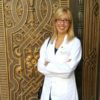
Dr. Kaitlyn Dykes is an Internal Medicine resident at Georgetown University Hospital, in Washington DC. She completed medical school at Thomas Jefferson University in Philadelphia Pennsylvania and was a part of the clinical research tract. She completed her bachelors of science in Genetics, Cell Biology and Cell Development with a minor in Art History at the University of Minnesota, Twin Cities. She her most recent research is in the field of hematology oncology. Additionally she is actively involved in medical education. Hobbies include reading, painting, visiting museums (when they are open), and enjoying time with friends and family. She hopes to pursue a career in hematology-oncology.