Archived Columns

Krutika Parasar Raulkar Krutika Parasar Raulkar (7 Posts)

Columnist and in-Training Staff Member

Rutgers Robert Wood Johnson Medical School


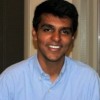
Hi! My name is Krutika Parasar and I started this blog as a medical student at Rutgers Robert Wood Johnson. I have lived in New Jersey all my life, except for my undergraduate years at Brown University. I love exercise and sports, singing and playing the piano, and spending time with my family and friends.

Exercise as the Best Medicine

The further I progress in my medical training, the more passionately I believe that exercise is the best preventive medicine. In this column, I share research regarding exercise as medicine, ways medical students can incorporate exercise into their daily routines, poetry on positive exercise experiences, and highlights on how doctors in the community are using exercise as a means to treat their patients.


Why Exercise is the Best Medicine

More and more doctors are hailing exercise as both preventive and therapeutic medicine, targeting a multitude of symptoms and diseases. In fact, The American College of Sports Medicine (ACSM) has launched efforts to teach physicians to prescribe exercise to all of their patients as a routine part of their visit. What are some reasons that exercise the best medicine?

How to Make Challah: The Jewish Octopus

Challah bread is traditionally prepared for Jewish holidays and the Sabbath. We made ours on a Wednesday night. Helen and Marie stare warily from their wheelchairs as a dozen medical students file into the retirement home lounge, toting tubs of flour and challah dough. “We’re not playing bingo?” Helen asks, looking disappointed, as students and octogenarians begin matching up for the evening.

Good Food Brings Us Together

It was a tough week for many of us. Scary events in the news. As phrased so eloquently by a fellow writer here, community injustice is intimately related to patient care. On my psychiatry rotation, I regularly hear about unbelievable violence that stems from and leads people into substance abuse, mental illness and crises resulting in hospitalization. I ended the week feeling sorry for our country and socially isolated from my peers.

Escaping the Sphere

Step 1 studying can be a lonely endeavor. This is true even if you have a study buddy — you may share a table at the local café, but you might as well be sitting in two different worlds. One of you reviews cardiac physiology while the other watches a renal pathology lecture. Your worlds may convene occasionally as one of you quizzes the other on neurocutaneous syndromes or shares an interesting tidbit from a question bank …

Where No One Knows Your Name

I worked my last shift in the emergency department as a medical student last week. A few hours in, I walked to the chart rack and grabbed the next patient to be seen. I walked into the room in question and introduced myself in that fluid, simple way I’d perfected over thousands of encounters over the previous few years. “Hi, I’m Sarab Sodhi, the fourth-year med student on the team. What brings you in to see us?” …

The Research-to-Medicine Culture Shock

Now that I have finished my PhD and moved on to the rest of my medical training, the last few months have been an interesting change of pace. Since I took first-year medical school classes piecemeal while spending the majority of my time working on my doctoral research, being a full-time medical student now is a new experience (and a culture shock in some ways) for me! I’ve had to reevaluate the utility of my …

How to Stay Sane in Medical School: Review of “The Mindful Medical Student”

As medical students, we are handed many books and are told to read them — and memorize them, usually. In addition to the technical, fact-filled and scientific books we are given, medical students would probably benefit from being handed a self-help book or two. It is interesting that medical students, a group intent on making our lives about caring for others, so often fail to care for ourselves. The difficulty with medical students is that …

Empathy, Refugees and Fad Diets

Medical school does a great job of teaching students about anatomy, biochemistry, differential diagnoses, diseases, medications, lab tests and imaging studies. Although science is a critical and indispensable part of being a doctor, understanding patients as unique individuals can be crucial to providing the best care. Knowing a patient’s story and being able to empathize can improve patient outcomes and adherence. While it is more difficult to quantify the effect of empathy than the effect …

Wounded Healers

Kaitlyn Elkins was a medical student at the Wake Forest School of Medicine in North Carolina and a member of the Class of 2015. She excelled academically, named the valedictorian of her high school class and graduating summa cum laude from Campbell University. She wrote poetry in her free time. She had a cat, lovingly named Gatito. On April 11, 2013, just weeks before beginning her clinical rotations, Kaitlyn Elkins took her own life. She left …

Falling Down the Rabbit Hole

how quickly one turns on oneself  inner demons circling overhead like opportunistic infections ready to invade predator and prey so vulnerable unprotected and unarmed.  survival of the fittest  I wrote this poem just a few weeks ago during a moment of overwhelming emotions that felt all too familiar. I’ve been writing poetry since middle school; it has always been a source of refuge for me, an outlet for my deepest fears and anxieties. Letting my …

Ebola-Fueled Racism and the Brain

When a Guinean woman was riding the bus in Italy, she was verbally harassed by a young Italian girl who was also a passenger on the bus. The girl was screaming and accusing the Guinean woman of having the Ebola virus. Then, the young girl’s relatives proceeded to assault and beat the woman. Although the victim was taken to the hospital, she sustained injuries from the attack. Race alone, rather than symptom presentation or travel …

Mariam Bonyadi Mariam Bonyadi (14 Posts)

Columnist and in-Training Staff Member

University of Illinois College of Medicine


Mariam graduated with a BS in microbiology, immunology, and molecular genetics at the University of California, Los Angeles, where she conducted undergraduate research in B-cell development and lymphomagenesis as well as the neurobiology of stress. In high school, Mariam spent several years studying mechanisms of induced pluripotency in an embryonic stem cell research lab at The Scripps Research Institute in La Jolla. She now studies computational neuroscience and medicine as part of the Medical Scholars Program (MD/PhD) and the Neuroscience Program (NSP) at the University of Illinois at Urbana-Champaign. Outside of research and clinical experiences, Mariam has earned a black belt in Taekwondo and enjoys yoga and San Diego beaches.

Bridging the Gap

Bridging the Gap focuses on the relationship between basic research and medicine, in order to develop an appreciation for the science that underlies the foundations of modern medicine.