

Featured

Brent Schnipke Brent Schnipke (18 Posts)

Medical Student Editor, Writer-in-Training and Columnist Emeritus

Boonshoft School of Medicine at Wright State University


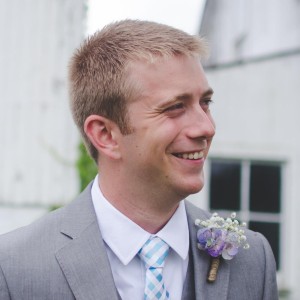
Brent Schnipke is a third year medical student at Wright State University Boonshoft School of Medicine in Dayton, OH. He is a 2014 graduate of Mount Vernon Nazarene University with a degree in Biology. His professional interests include writing, medical humanities, and higher education. When he's not studying, he can be found reading at a local coffee shop, training for his next race, or planning an adventure with his wife. Brent is also active on social media and can be reached on Twitter and Instagram @brentschnipke.

Prints, Pages, and Pagers

Prints, Pages, and Pagers aims to look closely at the lives of medical students and doctors, real or fiction, whose lives and experiences are told in novels, short stories, poetry, or any kind of writing. These book reviews are an opportunity for medical students to learn from the many fascinating stories produced by the field of medicine, and maybe to read something other than a textbook.


Review of “Gifted Hands”: The Ben Carson Story

Some people’s life stories are worth writing down because of one thing or several things they did that had a historical significance; others are worth writing because of the diverse experiences and interesting stories that filled their lives. In the case of Ben Carson, both of are true. In his autobiographical work “Gifted Hands,” the pediatric neurosurgeon outlines his fascinating life journey – one filled with inspiration, adversity and spirituality.
Attack of the Bends!

The nightmare begins like any other. At first, everything seems familiar. But slowly, you realize something is not right — something is out of place. Outside the window, clouds black as night gather, lurching forward like a hurricane. The thunder is so intense you feel the electricity pulsate through your chest. An impending doom consumes your emotions. The room seems to press in on you like some scene from “Alice in Wonderland.” Then the words creep in.

Are Financial Incentives the Answer to Our National Organ Shortage?

For patients struggling to stay alive, organ donation serves as a new lease on life. According to the U.S. Department of Health and Human Services, there are 123,358 people waiting for life-saving organ transplantation, yet there are only 13,125 organ donors. While subtle, nominal changes such as changing the U.S. organ donor program from an opt-in to an opt-out program have been proven to increase rates of organ donation, the rising levels of organ demand and stagnating levels of donors indicate that the only way to completely bridge the gap is through tangible and pervasive policy change.

Not About Me

“Write your name,” he said. I complied on a little scrap of paper. He was, after all, the senior in college who had just been accepted to medical school, and therefore all wise and all knowing. “Now write Dr. in front of it.” Again, I complied. “If you don’t feel a little surge of adrenaline when you see that, maybe medical school isn’t right for you,” he continued.

Booster

For me, hepatitis B booster shots feel pretty much as pleasant as being sucker punched in the arm. You can imagine that it didn’t inspire much elation when I scrolled through my calendar to see, spelled out in big red letters, a reminder for “Hep B #3.” Now, as I reflect, this reminder feels like a victory of sorts.

Two Days to Destiny

What were you doing on Wednesday, Feb. 25, 2015, at 9 p.m. EST? Were you taking a bath? Were you having a meal? Most people were probably watching their favorite television show, having quality time with their families or reflecting on the day’s happenings. However, about 20,000 medical students and medical graduates in the United States collectively held their breath at 9 p.m. EST.

On Productivity in Medical School

As a medical student, there is nothing more precious to us than time and brain space. More than once have I left a lecture thinking, “That was a complete waste of my time.” With the volume of information thrown at us, it is paramount to focus on the high yield. Every kind of resource, from Pathoma to First Aid, focuses on the high-yield information that will show up on Step 1. Sometimes, I don’t even think that far.

The Talking Cure: Atul Gawande Makes the Case for Humanism in End-of-Life Care

Many medical students made the choice to pursue their career path in their college years or even in high school, and nearly all doctors have chosen their profession by the end of their third decade. These are exhilarating years for young people. These are years where life can seem rich with freedom, opportunity, and, notably, with length. Dedicating a decade to medical training can seem like a choice that, though not easy, represents a worthy investment of one’s youth.

Katelee Barrett Mueller Katelee Barrett Mueller (2 Posts)

Contributing Writer

Tufts University School of Medicine


Katelee Barrett Mueller is an eighth year MD/PhD student at Tufts University School of Medicine, with interests in clinical and translational research and narrative medicine.