
Catharsis
An indulgent gasp / grasps the molded corners / dry tongue to chipping paint / searching for a word to say
Off the Shelf is our section for creative works by medical students.

Medical Student Editor and in-Training Staff Member
Albany Medical College
Steven attends Albany Medical College as a student of the Class of 2017. Raised in Queens, New York, he earned a BA in English with a minor in Biology from Binghamton University in May 2013. Some of his interests include poetry, martial arts, traveling, and continental philosophy. He is currently aspiring to become a radiologist.
An indulgent gasp / grasps the molded corners / dry tongue to chipping paint / searching for a word to say
“What is the meaning of life?”
A perfectly reasonable question, albeit a strange one considering that I was in the third grade, it was recess time, and I was having a philosophical conversation about death with a grasshopper I had just caught.
Mid-November, and Christmas music is already blaring from speakers camouflaged in silver holiday tinsel. Frank Sinatra’s croons reverberate throughout the barren expanse that is Somerset Mall at 8 a.m. “I’m dreaming of a white Christmas…” It’s raining outside. I begin to laugh and try to explain the apparent irony to my grandmother, but my attempt gets lost in translation. My Chinese is poor. Her English, poorer. After 12 years in the United States, Pópo has accumulated a modest vocabulary, most of which she’s forgotten.

For the majority of medical students gross anatomy is the first time we observe and cut into the flesh of preserved cadavers. Whether it is through a longitudinal year-round program, or a semester’s worth of concentrated anatomy, most of us develop a unique relationship with the cadaver gifted to us by generous donors.

Friendship is a powerful force that offers one celebration in one’s happiest moments, and solace in one’s most difficult times. Just as when two ducks meet to chat about their respective plights and offer each other support, medical student groups foster the same collaborative environment where students exchange ideas, challenge each other, and ultimately grow into better and more competent physicians. This important ideal binds all living things and gives them the strength to tackle life’s toughest obstacles.
Egg shell coat: / Tread softly, / Quietly. / To not crack the illusion / Of knowledge, / Bold aspirations.

The roses portrayed in this photograph represent a new generation, with a brighter vision and new hope for a more prosperous future. They illustrate the ideas of innovation within the realm of medicine, technology and science. These two lone creatures, with their majestic scarlet petals, shine brightly as beacons of industrialization for the advancement of our society to the 21st century.

Where do the squirrels go / during the rain? / Can they hear the thunder? / Can they feel my pain?
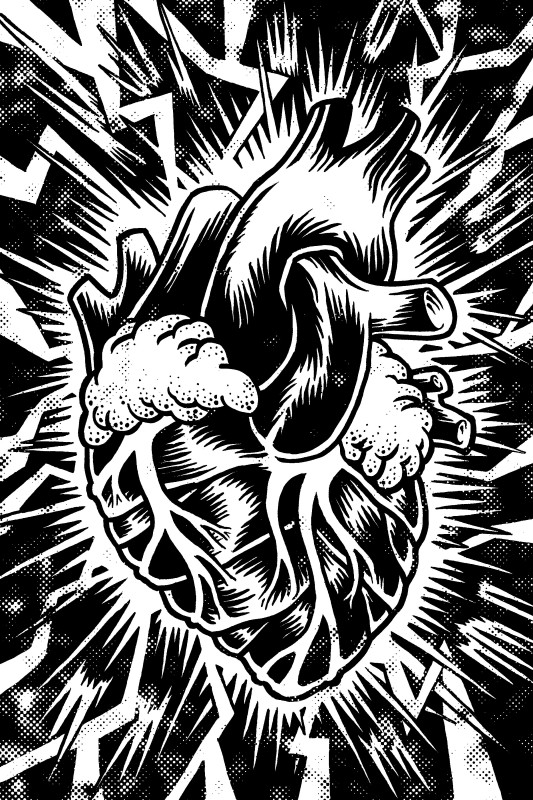
The beating heart is autonomous, having its own electric circuit to stimulate each contraction. Throughout the ages, the mystery of the heart has symbolized love and life in art and religion. Although this pulsing muscle has been highly studied by scientists, doctors and medical students across the world — dissected and scrutinized to the smallest detail — the aesthetic and metaphorical power of the human heart remains unchallenged.
The role of a medical caregiver is often daunting. While balancing multifaceted skill sets such as understanding of pathophysiology, proper application of clinical skills, minimizing health care costs, physicians must also maintain the primary goal of empathetic and supportive care for each patient. It is thus sometimes inevitable for physicians, medical students, or any other health care professionals to get caught up in any one of these pursuits and neglect another.
I cut where I am told, my arms moving with mechanical precision, / Following imaginary lines running throughout the body.
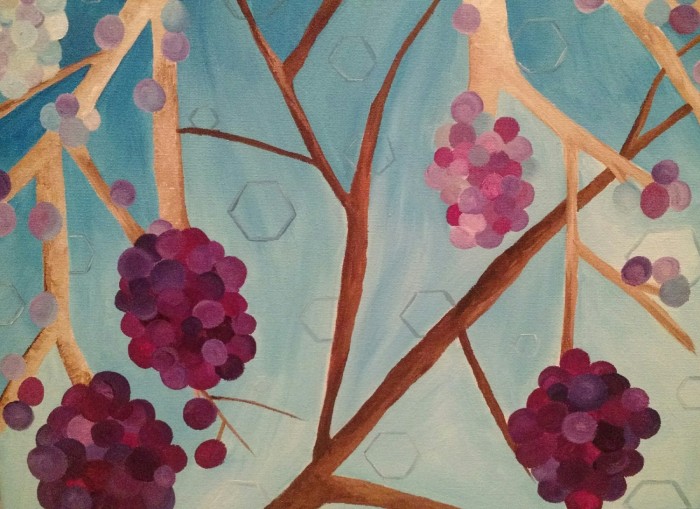
My inspiration for this piece stemmed from my experience working on the pulmonology service during my internal medicine rotation. I was moved by the vitality of our bodies and the organs that allow us to function. The lungs are one of the few organs that directly associate with the outside environment. Everything we breathe becomes part of our body, and as much as our body and respiratory epithelium can filter the air we breathe, it is not a perfect system. As a result, we breathe the world around us.

Contributing Writer Emeritus
Indiana University School of Medicine
Jennifer Evan is a 2011 graduate of Purdue University with a degree in liberal studies and a minor in chemistry. Having interests in a range of subjects, she enjoys participating in a variety of fields and experiences, from art and music, to writing and research. Her professional interests include international medicine and culture, while her academic passion is neurological studies. She is a member of the Indiana University School of Medicine Class of 2016.
