
Featured

Arya Shah Arya Shah (2 Posts)

Contributing Writer

Mayo Clinic School of Medicine


I'm currently in the Midwest at the Mayo Clinic School of Medicine and hoping to pursue a career in psychiatry, neurology or some combination of the two. What gets me through the cold, dark Minnesota winters is my writing, my hot yoga, and my perpetually growing to-do list of art projects. In continuing to pursue creative endeavors, and in working to engage my classmates in the arts, I hope to show people that creative expression can help to keep burnout at bay and help to keep humanism alive in medicine.


Women as the Scapegoats of Medicine: A Brief History of a Twisted Differential Diagnosis

Black hellebore, a flower of the deepest black and with petals the sinister shape of blunted arrowheads, grows wild in the cool, mountainous regions of the Balkans. Despite its unintimidating label as the “Christmas rose,” the hellebore has a much darker history, one bespoken more by the flower’s ebony hue than by its innocuous nickname.
Adventure #6: Climbing to the Top of the World (or the Halfway Point at the Local Gym)

One of my bucket-list goals before I die is to climb Mount Everest and Mount Kilimanjaro. Where did this come from? I’m not entirely sure. Yet something about climbing the tallest two mountains in the world has always appealed to me; I like challenges, and I can see no greater challenge to my physical and mental fortitude. However, even though I try to work out regularly, I’ve never gone rock climbing in my life. Therefore, keeping this bucket-list goal in mind, I decided to grab some friends and go rock climbing for my next adventure.

Anatomy as Art: Installation #17

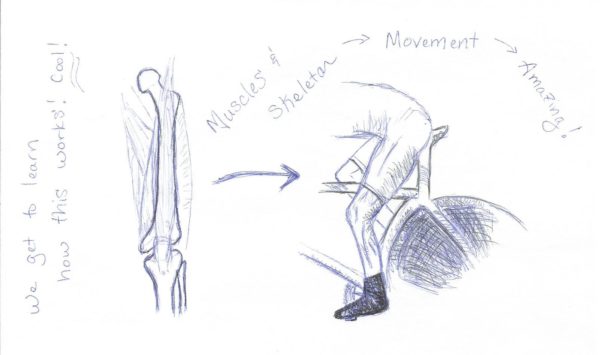
At Albany Medical College, upon our orientation to gross anatomy, we are asked to draw our feelings on blank index cards prior to entering the cadaver laboratory. As we progress through the year, our sentiments regarding anatomy may remain the same, or may change, and these drawings allow us to look back at this milestone we crossed as budding medical students.

A Third Year Opus — Chapter One: Incidental Findings

The white coats and patient gowns that confer the implicit power dynamic of the physician-patient relationship are not to be found here in the operating room. This place has neither the tolerance nor the patience for this subtle symbolism. Here, on the other side of the Rubicon, the rules are stark, the stakes laid bare. The patient lies naked on the table, arms extended on boards, Christ-like, as the surgeon holds the knife handle and plays God.

Doctors Against DAPL

On Thursday, many of you will gather round a dinner table with your loved ones and give gratitude for your friends, family and good fortune. Many of you will think of the meal associated with the inception of this holiday, be filled with warm fuzzy feelings and gloss over the real history surrounding the relationship between those who supposedly attended the first “Thanksgiving” dinner. After eating a second helping of Grandma’s famous pie, few will be concerned about the side of historical oppression or racist colonization offered with this dinner because well, that isn’t so palatable.

Against the Dying of the Light

Everyone at the nursing station turned silent and looked at the nurse who had delivered the news. I looked at her in disbelief, my brain struggling through a fog of confusion and surprise. I squinted at my patient list trying to remember who was the patient in 1152. Recognition finally hit and I remembered the little old lady that we saw during rounds two hours ago.

Patient Advocacy in Trump’s America

It’s been a hard week. Hard, of course, because this election has caused an unprecedented wave of fear across our nation. Hard because those whose lives have been invalidated by our newest president elect are already exhausted by the daily struggle of living in a hostile country. And — not to be discounted — hard because bad days in medical school seem to hunt in packs and pounce all at once.

PrEParing for Controversy: Understanding the Limitations of Pre-exposure Prophylaxis

The history of the HIV/AIDS epidemic is marked by devastating losses and a disease burden that persists to this day. Though slow to emerge, both government policy and pharmaceutical research began to address the epidemic, and the resulting combinations of antiretroviral cocktails and outreach programs have helped make HIV infection a manageable, if inconvenient, chronic condition. In 2012, however, the FDA approved a drug that had the potential to shift both the American and global strategies regarding HIV and AIDS.

Neepam Shah Neepam Shah (3 Posts)

Writer-in-Training

Rowan University School of Osteopathic Medicine


Neepam Shah is a New Jersey-based osteopathic medical student interested in Netflix binges, Spotify's eclectic recommendations, and examining the power structures and cultural trends that shape lived experiences. When he's not in class, you can find him in a Philadelphia coffee shop over-caffeinating and procrastinating.