
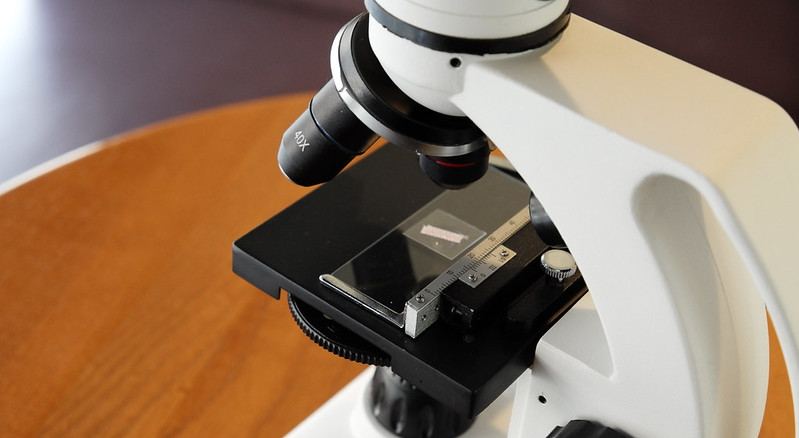
From premed onward, an interest in pathology is often met with a well-meaning but mildly disapproving joke. It comes from friends, family, mentors and internet forums. “You must hate patients.” It seems introverts and misanthropes alike are often relegated to the sub-sub-basements and windowless corners of the hospital, where radiologists and pathologists hiss at lost patients. While every specialty is ripe with ridicule and stereotypes, this particular joke damages the image of an already underappreciated and misunderstood field among medical students.
The jokes, of course, have not gone unnoticed. Like many who choose less “popular” specialties, I have faced moments of doubt and self-reflection on my specialty choice. I often asked myself, “do I hate interacting with patients? If I do not, is this the right career for me?” But that line of questioning was flawed from the start, it assumed that valuing patient care and choosing pathology are mutually exclusive. Pathology is not devoid of patient care; it is foundational to it. Every slide examined and every diagnosis made directly shapes patient outcomes. It’s not that pathologists avoid or hate patient care, it’s that we engage with it in a different, deeply essential way. To suggest that pathologists are disconnected from patients is to misunderstand the nature of the work itself.
The reasons medical students pursue pathology, or any specialty, are vast. Today, students are privileged with the ability to explore specialties virtually and in person through shadowing, the AAMC’s Careers in Medicine program, or even YouTube interviews with physicians. Despite my early interest in pathology, I have come to appreciate that the field’s distinctiveness goes beyond indirect patient interaction. Some students find their preclinical years more fulfilling than their clinical rotations and are drawn to fields like radiology, pathology, medical genetics or preventive medicine. Yet, the misconception persists that students choose these specialties purely out of a distaste for patient care.
Most people define patient care as what happens at the bedside, such as performing a physical exam, discussing treatment options or administering medications. But patient care extends well beyond these interactions. It includes the surgeon meticulously planning an operation, the radiologist identifying a barely visible mass and the pathologist catching a subtle feature on a biopsy that changes a patient’s treatment course. I experienced one of the most important yet overlooked aspects of patient care while working on the medical autopsy service. To many pathologists, an autopsy is a patient’s final doctor’s visit and is one of the most intimate and compassionate forms of care. Though the procedure offers no benefit to the patient, it provides families with answers and closure, especially after an unexpected or sudden death. For the hospital, it serves as a quality control measure, assessing care before the patient’s passing and ensuring that knowledge gained benefits future patients. Like many aspects of pathology, it may appear macabre and impersonal, yet it provides immense value to both practitioners and families. It provides clarity and answers to those waiting anxiously on results. This is what makes pathology a critical, though underappreciated, component of patient care. When we define patient care too narrowly, we fail to recognize the many hands that shape a patient’s outcome. We also risk pushing talented students away from fields they might love, simply because of external stigma rather than internal conviction.
Ultimately, a student’s specialty choice should be guided by personal fulfillment, not misplaced judgment. We like to believe stigma does not affect our decisions, but it lingers in subtle ways, shaping our conversations, influencing the mentors we seek and forcing us to justify our choices. When students internalize the misconception that pathology, and other behind the scenes specialties, lack compassion, they may hesitate to explore fields where they could truly thrive. Some may feel pressured to choose a specialty that aligns with traditional notions of patient care rather than one that best suits their skills, passions and values.
In my heart of hearts, I believe all medical students enter the field with a desire to care for patients. Choosing pathology does not mean someone lacks empathy or is indifferent to patient care. It simply means that their passion for medicine is directed in a way that allows them to make a difference behind the scenes. Pathologists are hidden advocates, fighting for the best patient outcomes through the precision of their work. So, the next time someone asks, “you must hate patients, huh?” I will smile, knowing that patient care is much broader and much deeper than they may realize. Instead, the next time we meet a future pathologist, let us try saying, “you must love science.”
Image Credit: "Microscope" (CC BY-ND 2.0) by TheBetterDay